
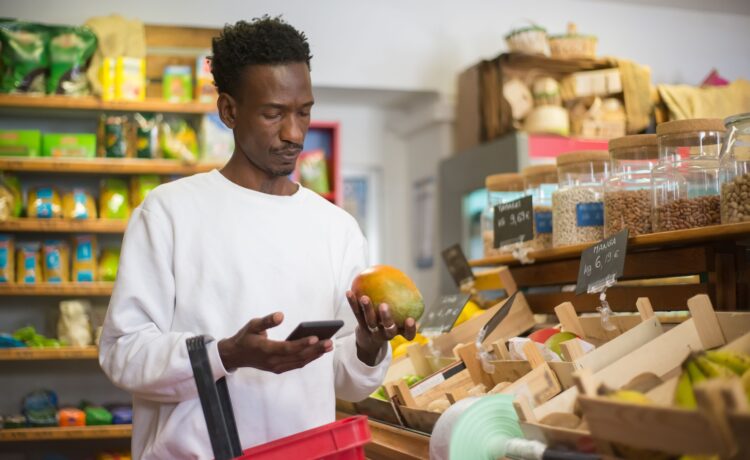
Why the future of retail marketing isn’t print vs. digital. Instead, it’s using each channel where it works best.
“Print is dead.”
We’ve all heard that one.
Depending on the week, you might hear the same thing about email, digital advertising, social media, or just about every other marketing channel.
The problem with those declarations is that grocery shoppers don’t behave in absolutes.
More than 90% of grocery shoppers now shop both online and in-store. And according to FMI’s 2026 research, 77% are digitally engaged before they shop and 71% remain digitally engaged while shopping.
The shopper has already become omnichannel. So perhaps the real question isn’t, “print or digital?”
It’s, “what job should each one be doing?”
Print Isn’t Dead. But the Old Weekly Ad Formula May Be Dying.
Print has played an important role in grocery marketing for generations. And there’s still value in having something physical shoppers can see, touch, and encounter in the store or at home.
But that doesn’t mean every piece of print deserves to survive simply because it always has.
One grocery retailer recently told us they were printing more than 2,000 weekly ads for in-store distribution, and shoppers were taking only about 100.
That’s not necessarily evidence that print doesn’t work.
It’s evidence that this particular use of print may no longer work.
And it creates a much more interesting question:
What if you stopped printing what shoppers don’t use and reinvested in print they actually notice?
That could mean fewer stacks of weekly ad flyers and more strategic:
Shelf signage. In-store promotional displays. Targeted direct mail. QR-enabled signage. Digital-deal callouts.
Even as digital adoption grows, 94% of grocery shoppers purchased both online and in-store in 2025.
Print doesn’t have to disappear.
It may simply need a new job.
Digital Isn’t the Wild West Anymore. But It Does Need a Reset.
Digital advertising can feel messy.
Attribution is complicated and platforms often report enormous (and incorrect) numbers. Retailers are asked to trust impressions, clicks, views, conversions, and algorithms they may not completely understand.
For independent and regional retailers, there’s another challenge: you aren’t going to outspend the largest national chains.
But walking away from digital isn’t the answer either.
Your shoppers are already there.
98% of grocery shoppers walking the aisles have a smartphone. Half use digital coupons, compared with 37% who use physical coupons.
And digital isn’t replacing the physical shopping experience.
It’s becoming part of it:
- 77% digitally engaged before the trip.
- 71% digitally engaged during the trip.
- 90%+ shopping both online and in-store.
The opportunity isn’t simply to “buy more digital ads.”
It’s to make digital media more useful, measurable, and connected to the promotions already driving your business.
Stop Choosing Channels. Start Connecting Them.
This is where grocery marketing gets more interesting.
Imagine a weekly promotion starts inside your digital circular.
A shopper sees a featured product, but instead of stopping at a price, they discover an entire dinner idea built around it.
- They find a recipe.
- They see the ingredients.
- They find relevant savings.
- An email brings the idea back to their inbox.
Digital advertising introduces that same meal to shoppers who haven’t opened the circular yet.
And when they walk into the store, signage reinforces the promotion.
That isn’t print marketing, nor is it digital marketing.
It’s one connected shopper experience.
50.3% of U.S. grocery shoppers say they would use in-store digital tools if exclusive instant savings and coupons were available through them.
And increasingly, that is how Webstop is thinking about the future of the grocery circular.
From Weekly Ad to Meal Inspiration
Webstop is reimagining the grocery digital circular around what shoppers actually need, not simply recreating the printed weekly ad on a screen.
This is why we created Connected Meals, a new experience within Digital Circular Plus that brings together two things shoppers consistently care about: Meal solutions + savings.
Featured circular products become complete dinner ideas supported by recipes, relevant offers, digital coupons, email, digital advertising, and engaging content.
Instead of asking shoppers to look at a chicken breast, a package of vegetables, and a promotional price and figure out what comes next, Connected Meals helps answer the bigger question: “What’s for dinner?”
That is the opportunity digital creates when we stop treating it as another place to run an ad.
The Future Is a Smarter Mix
Grocery retailers don’t need another person telling them print is dead.
They don’t need someone telling them to shift every available dollar into digital, either.
They need to understand what shoppers are actually using, what is driving action, and what deserves their marketing investment.
Maybe that means printing fewer weekly flyers.
Maybe it means putting more emphasis on in-store signage.
Maybe it means using targeted digital advertising to expand the reach of promotions.
Maybe it means transforming the digital circular from a collection of products and prices into a source of actual shopping inspiration.
Most likely? It means some combination of all of them.
Webstop has spent more than 25 years helping independent and regional retailers evolve alongside their shoppers.
Now we’re helping retailers rethink what comes next—from the future of the weekly ad and strategic print to digital advertising and new experiences like Connected Meals.
Because the future of grocery marketing isn’t print or digital.
It’s making every channel work harder together.
Let’s talk about your marketing mix.
Book a demo or reach out to us: sales@webstop.com.