
What grocers learned about digital engagement, media innovation, and the evolving shopper mindset
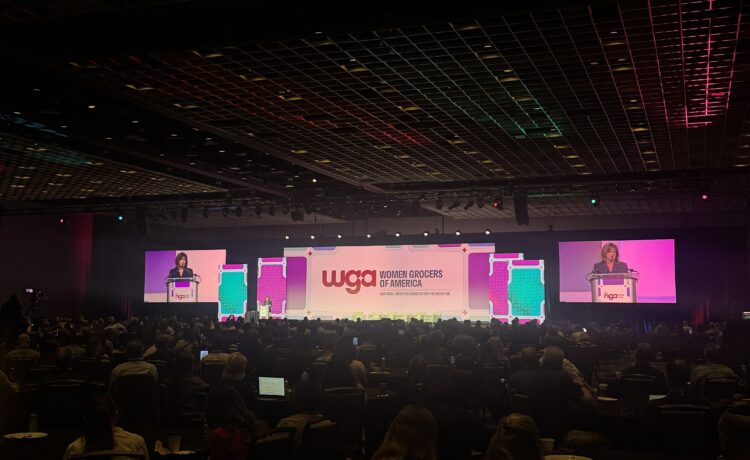
Now that we are through January and February, we wanted to do a conference wrap up from FMI Midwinter in Chula Vista and The NGA Show in Las Vegas.
Both events reinforced something we’ve been seeing across the industry recently: grocery continues to evolve, but the most successful strategies are rooted in making life easier for shoppers and staying true to what you specifically do best.
Across conversations, panels, and one-on-one meetings, several themes recurred.
Keep reading for four gamechangers that are shifting the grocery landscape in 2026, plus what they mean for your marketing strategy.
#1 A Return to Being Human
Artificial Intelligence.
Retail media.
Agentic commerce
The buzzwords were everywhere at both shows.
But what stood out most was a renewed emphasis on being human.
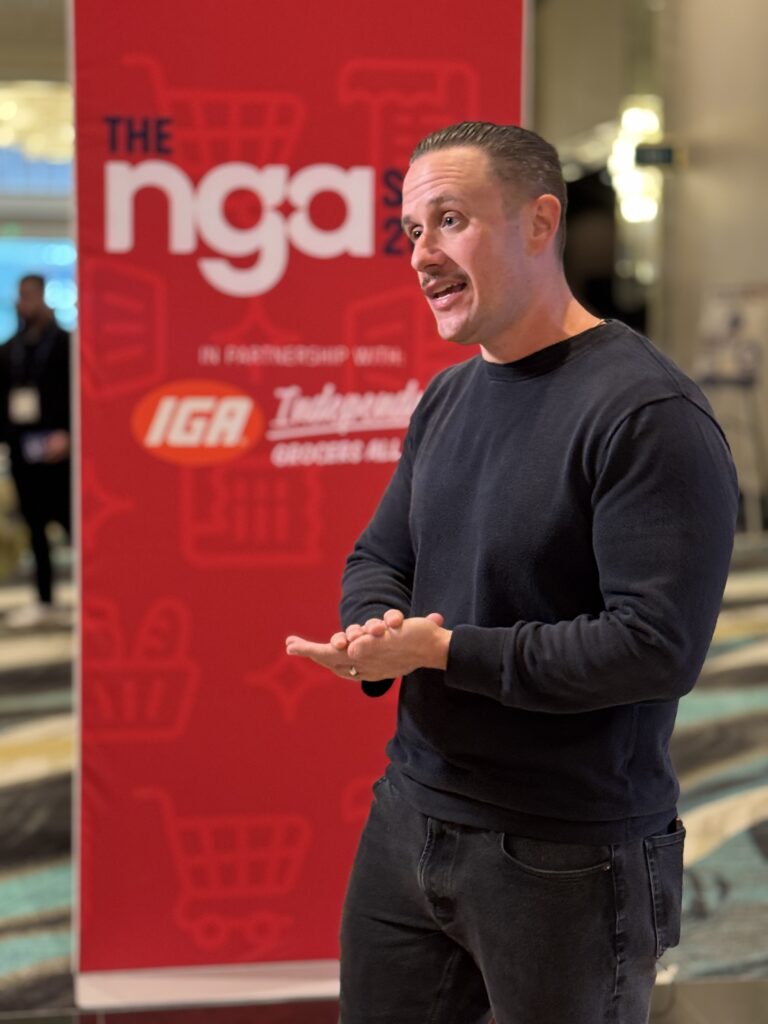
As Webstop CEO Shawn Tuckett shared during conversations at NGA, these events have changed dramatically over the years. What started as food shows has become a showcase of technology, marketing, and services. Digital platforms are now table stakes for success.
At the same time, retailers are pushing back on the idea that technology alone is the answer. Especially among independent grocers, there was strong alignment around leaning into authenticity. Treating people well. Making shoppers feel good when they walk into the store.
Technology definitely matters. But it works best when it supports the core experience, not when it replaces it. Don’t try to be Amazon, you can’t beat them with tech but use tech where it makes sense and beat Amazon at what you can, being a great local grocer.
#2 Inspiration Beats More Work
One of the clearest insights from both FMI and NGA was simple:
Shoppers do not want more work. They want inspiration.
Over the past decade, retailers have invested heavily in digital solutions like e-commerce, digital coupons, loyalty programs, digital circulars, and more. But instead of a seamless experience, many grocers now have “digital frankensteins” aka a collection of disconnected features that don’t work together.
Retailers are now rethinking how digital experiences show up in everyday moments. Instead of sending shoppers on a treasure hunt across multiple pages and platforms, they are looking for ways to remove friction entirely.
That means:
- Coupons tied directly to the ingredients on sale
- Recipes that surface at the right moment, not buried in a content library
- The ability to move from a recipe to a shopping list or in-store action in just a few clicks
As Shawn shared during his NGA panel, the goal is to make the meal maker at home the hero. When inspiration is easy to act on, engagement follows naturally.
#3 Using Social Media to Bring Shoppers Back
Social media has long been used to inspire grocery purchases, but now it’s becoming a direct path to purchase. Platforms like TikTok Shop are driving billions in sales, with food ranking among the top-performing categories.
There was a clear-eyed view of social media’s role in grocery marketing.
Retailers know they will not out-engage TikTok or Instagram. Shoppers are already there, and they will continue to be.
What’s changing is how retailers use those platforms to their advantage.
We heard strong interest in ideas like:
- Coupons that clip directly from social media but are redeemable in-store
- Social content that lets shoppers add ingredients straight to a list on the retailer’s website
- Campaigns that use social discovery as a bridge back to owned channels
When social media helps reduce friction and bring shoppers back to the retailer, it becomes a powerful extension of the store experience.
#4 Retail Media Is Entering Its Next Phase
In discussions with retailers and during Shawn’s conversation with Kevin Coupe of MorningNewsBeat, the focus was clear: move away from mass blasting and toward relevance.
Shoppers see hundreds of ads every day. Most of them are tuned out instantly. What cuts through is connection.
Retailers and brands are becoming more selective, more targeted, and more thoughtful about which campaigns run, where they appear, and who they are meant for.
The future of retail media is not about volume. It’s about creating experiences that begin online and lead to meaningful in-store moments that improve the shopping experience.
So, Where Do We Go Now?
Across both FMI Midwinter and NGA, a clear pattern emerged.
Retailers understand that technology is now part of the cost of doing business. Digital marketing is embedded in nearly every shopper interaction, from discovery to checkout. But what separated the retailers gaining momentum from those feeling overwhelmed was not the size of their tech stack. It was how intentionally they used it.
The strongest retailers weren’t looking for shortcuts or breakthrough tools to solve everything at once. They were asking more practical questions. How do we make shopping easier? How do we show up in ways that feel helpful instead of distracting? How do we use digital touchpoints to strengthen the in-store experience rather than compete with it?
The retailers that stood out were not chasing silver bullets. They were focused on:
- Removing friction
- Inspiring shoppers
- Being more human
- Creating relevance instead of noise
Retailers talked about relevance over reach, connection over volume, and experiences that shoppers remember because they made life a little easier.
That mindset points to where grocery is headed next. Not toward louder marketing or more complexity, but toward simpler, more thoughtful engagement that earns trust and keeps shoppers coming back.
What this Means for Grocers Today
If anything stood out across conversations, it’s that progress doesn’t require starting from scratch. Retailers are finding success by strengthening what already works and connecting it more thoughtfully across the shopper journey.
Grocery doesn’t have to choose between digital and in-store, inspiration and conversion, or technology and human connection. The opportunity in 2026 is to bring those pieces together into experiences that feel seamless, relevant, and easy for shoppers to act on.
Webstop helps retailers connect their website, digital circular, coupons, e-commerce, and loyalty programs into a single ecosystem designed to drive engagement, increase basket size, and improve retention. When each feature supports the next, marketing stops feeling fragmented and starts delivering measurable impact.
In case you missed it, get a copy of Shawn’s presentation “2026 Engagement that Lasts” below.
Ready to turn engagement into action?
Book a demo or reach out to us: sales@webstop.com.